Cyber Security for Everyday People: Which Habits Actually Stop Attacks

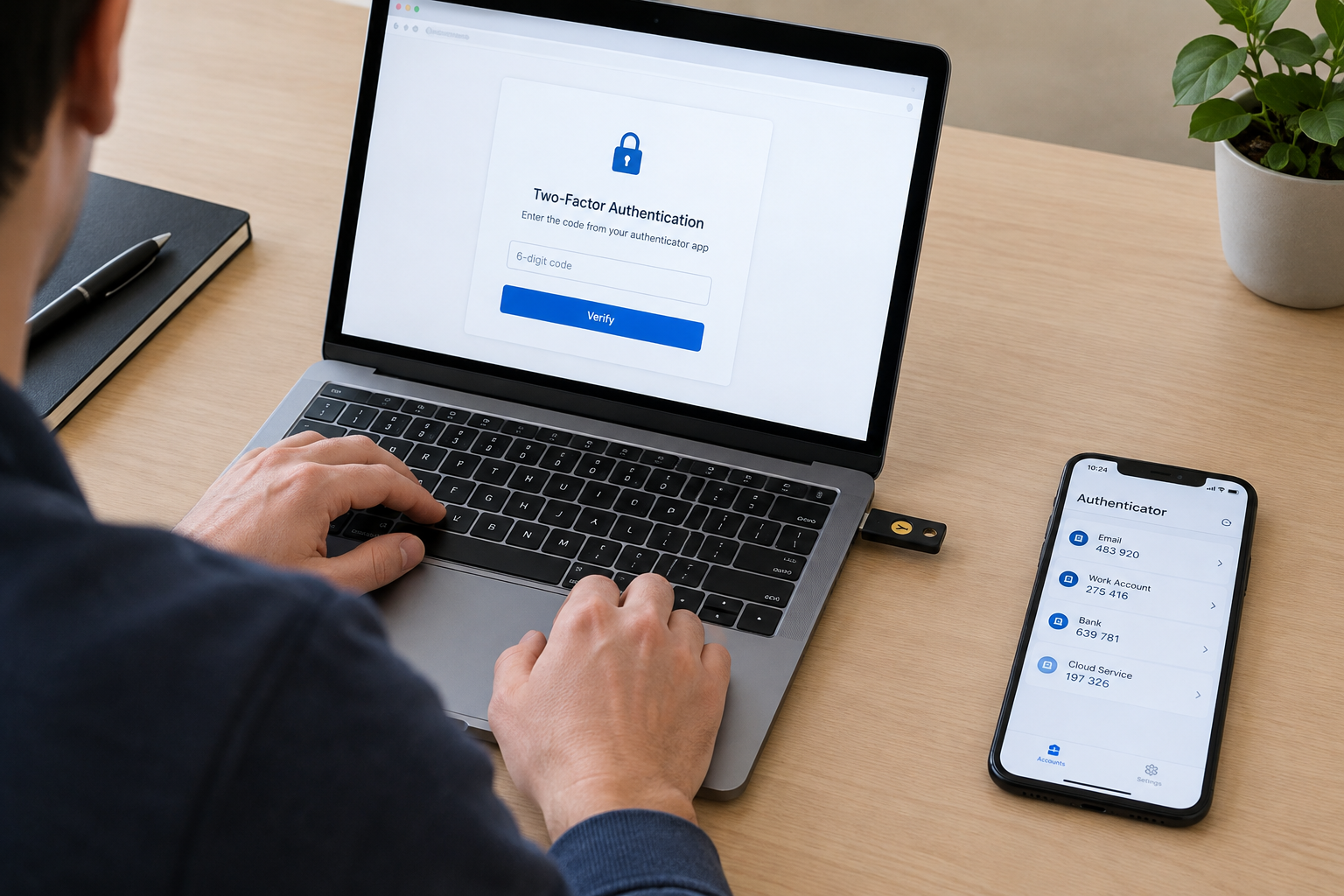
Person using a laptop with a hardware security key for two-factor authentication

Cyber security advice has a volume problem. Between vendor blogs, news alerts about the latest breach, and well-meaning relatives forwarding warnings, ordinary users are told to do hundreds of things. Most of them quietly give up, and the ones who don’t often spend their effort on low-impact tasks while leaving the doors wide open. The

Read more about Cyber Security for Everyday People: Which Habits Actually Stop Attacks
Hackers Are Walking Through Unpatched Doors, Not Guessing Passwords: What the 2026 Breach Data Means for Cyber Security

IT technician checking a network firewall in a small server room

For years, the standard advice in cyber security started with passwords: make them longer, make them unique, turn on two-step login. That advice still holds. But the latest large-scale breach data suggests the front door attackers prefer has changed. Verizon’s 2026 Data Breach Investigations Report (DBIR), now in its 19th edition, found that vulnerability exploitation,

Read more about Hackers Are Walking Through Unpatched Doors, Not Guessing Passwords: What the 2026 Breach Data Means for Cyber Security

Software Supply Chain Security in 2026: New Cybersecurity Risks, Attacks and Protection Strategies

Text: Software supply chain security protecting applications, dependencies and development pipelines

Modern software is rarely built entirely from code written by one company or developer. Applications often depend on open-source libraries, third-party packages, cloud services, development tools, code repositories, APIs and automated build systems. That interconnected ecosystem makes software development faster, but it also creates another cybersecurity challenge: software supply chain security. In 2026, cybersecurity researchers

Read more about Software Supply Chain Security in 2026: New Cybersecurity Risks, Attacks and Protection Strategies

AI Cybersecurity in 2026: How AI Agents Are Changing Cyber Threats and Defense

AI cybersecurity system monitoring cyber threats and security operations in 2026

Artificial intelligence is changing cybersecurity from both sides of the battlefield. Security teams are using AI to analyze alerts, investigate suspicious activity, detect threats and automate parts of incident response. At the same time, threat actors are increasingly using AI to automate parts of phishing, reconnaissance, social engineering and other cybercrime operations. Recent research from

Read more about AI Cybersecurity in 2026: How AI Agents Are Changing Cyber Threats and Defense

Agentic AI and Cybersecurity in 2026: How AI Is Changing Cyber Attacks and Defense

Security operations center using artificial intelligence and AI agents to detect and respond to cyber threats

Cybersecurity is entering a new phase in 2026 as artificial intelligence becomes more capable of analyzing information, automating tasks and assisting with complex digital operations. For years, cybersecurity teams have used automation and machine learning to detect suspicious activity. The major change now is the growing use of AI agents that can perform multiple steps

Read more about Agentic AI and Cybersecurity in 2026: How AI Is Changing Cyber Attacks and Defense

EvilTokens Phishing Attack: How Device Code Phishing Is Stealing Microsoft Account Tokens in 2026

EvilTokens device code phishing attack targeting authentication tokens and business accounts

Cybersecurity researchers are warning about a sophisticated phishing-as-a-service operation that uses device-code authentication, automated infrastructure, AI-assisted phishing lures and stolen authentication tokens to compromise organizational accounts. Microsoft Threat Intelligence published new research on September 22, 2026, detailing a phishing platform called EvilTokens. According to Microsoft, the platform emerged in February 2026 and quickly became one

Read more about EvilTokens Phishing Attack: How Device Code Phishing Is Stealing Microsoft Account Tokens in 2026