
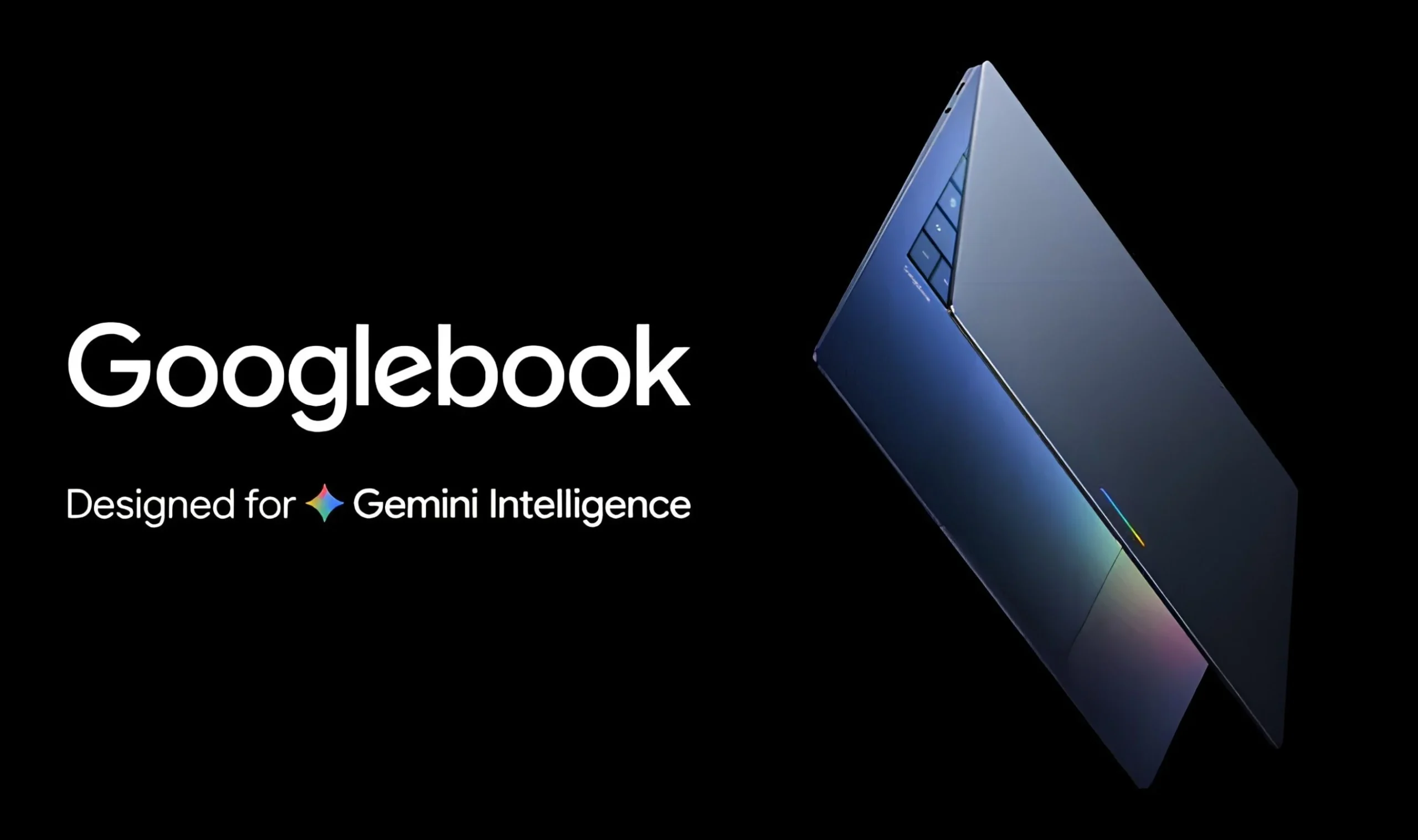
Google is entering a new chapter in laptop computing with Googlebook, a new category of premium laptops designed around Gemini Intelligence and deeper integration with Android smartphones.
Google announced the first Googlebook devices on September 21, 2026, with pre-orders opening the same day. The first models are being developed with major laptop manufacturers including Acer, ASUS, Dell, HP and Lenovo. Google says the new devices combine the Android technology stack with desktop foundations from ChromeOS and are designed to work closely with Android phones.
The Googlebook launch is notable because Google is not presenting it simply as another Chromebook generation. Instead, the company is introducing Googlebook as a new laptop category focused on AI, Android integration, premium hardware and on-device intelligence.
Prices start at $899, while U.S. availability begins October 4, 2026. Google also says every Googlebook includes 12 months of Google AI Pro, 5TB of cloud storage and additional software benefits.
What Is Googlebook?
Googlebook is Google’s new premium laptop category.
According to Google, the platform combines the Android technology stack with desktop foundations from ChromeOS. It is designed around Gemini Intelligence and is intended to connect naturally with Android smartphones.
The idea is straightforward: people increasingly move between smartphones and computers during the same task.
You might begin writing a message on your phone, continue research on a laptop, transfer files between devices and then return to your phone.
Googlebook is designed to make that transition more seamless.
Rather than treating the Android phone and laptop as separate devices, Google is building Googlebook around closer integration between them.
Googlebook Release Date
Google announced Googlebook on September 21, 2026.
Pre-orders are already open through the Google Store, Best Buy and other select retailers.
The first availability dates announced by Google are:
| Market | Availability |
|---|---|
| United States | October 4, 2026 |
| Canada | October 5, 2026 |
| United Kingdom | October 5, 2026 |
| Ireland | October 5, 2026 |
| France | October 5, 2026 |
| Germany | October 5, 2026 |
| Australia | October 5, 2026 |
Availability can differ by model and region, so customers should check local Googlebook listings before ordering.
Googlebook Price
Googlebook starts at $899 in the United States.
Google is offering multiple hardware configurations through different manufacturers, so pricing will vary depending on the specific model, processor, display and other hardware features.
Google says every Googlebook includes 12 months of Google AI Pro, which provides 5TB of cloud storage and higher usage limits in Gemini. The launch package also includes additional subscriptions and services, including three months of YouTube Premium and Adobe Photoshop.
The exact value of these bundled services will depend on whether a buyer already subscribes to them.
Five Googlebook Manufacturers
Google is launching Googlebook with hardware from several established laptop manufacturers.
The initial lineup includes:
- Acer
- ASUS
- Dell
- HP
- Lenovo
Google describes the lineup as a collection of flagship devices designed to offer different approaches to premium laptop computing.
This manufacturer strategy is important because Googlebook is not a single laptop model.
Instead, it is a broader hardware and software platform.
Different manufacturers can offer different sizes, designs, processors and configurations while maintaining the Googlebook software experience.
Premium Googlebook Hardware
Google says Googlebook devices use premium materials including:
- Aluminum
- Magnesium alloy
- Carbon fiber
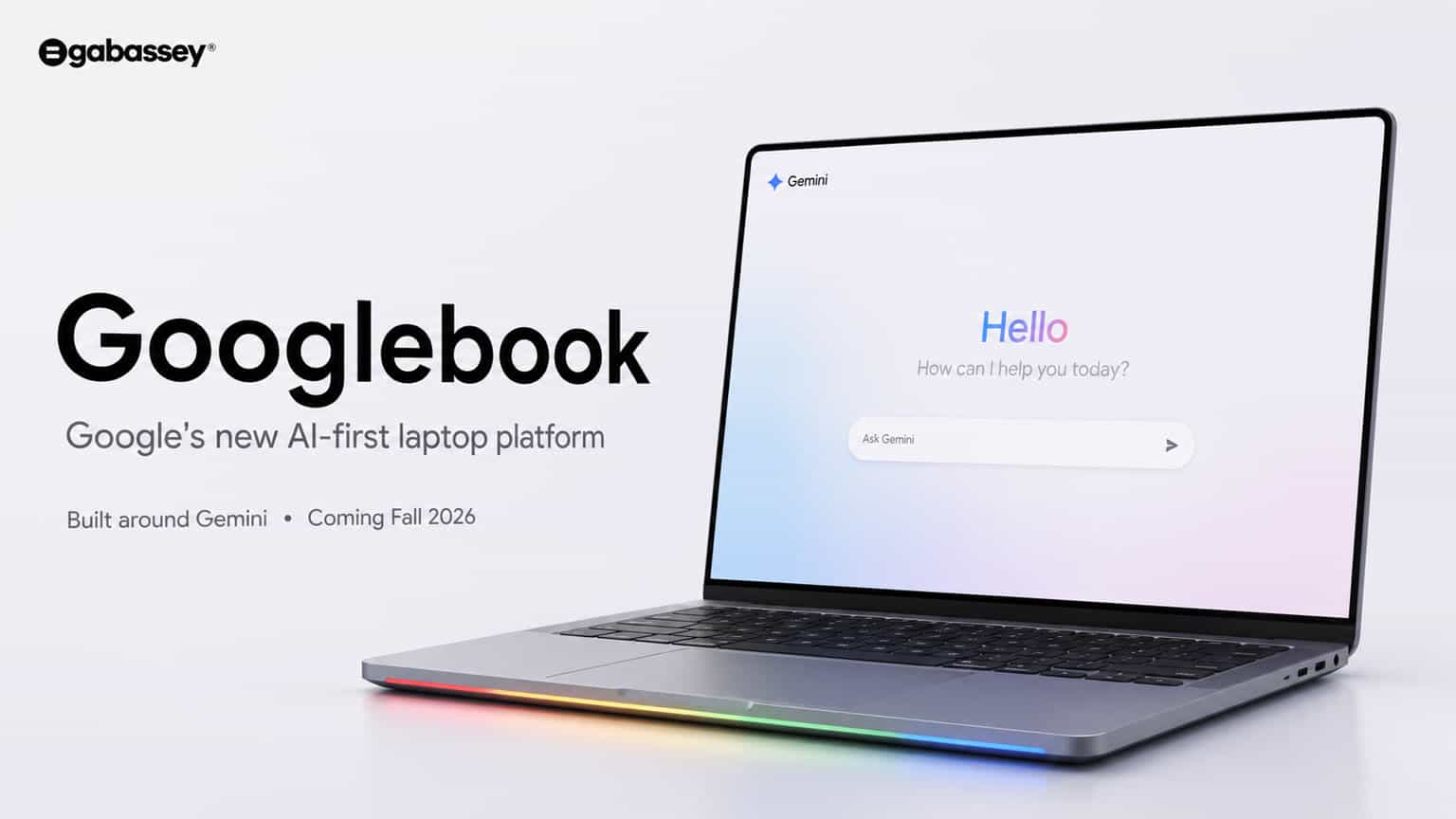
The laptops feature touchscreens with resolutions of up to 2.8K, along with haptic glass trackpads and backlit keyboards.
Google is also bringing back its Glowbar design element.
The Glowbar can illuminate during startup, display battery-related animations and respond with visual effects when users interact with Gemini.
Googlebook Display Technology
Googlebook devices can feature high-resolution touchscreens, with some models reaching up to 2.8K OLED resolution.
That gives manufacturers flexibility to target different types of users.
For example, a laptop designed for creators may prioritize display quality, while another model may focus more heavily on portability or battery life.
Googlebook Processors and AI Performance
Google says Googlebook launches with processors from Intel and Qualcomm.
Depending on the model, users can find options such as Intel Core Ultra Series 3 and Snapdragon X Elite processors.
These processors are paired with dedicated NPUs capable of more than 45 TOPS of on-device AI processing.
An NPU, or Neural Processing Unit, is specialized hardware designed to accelerate certain artificial intelligence and machine-learning workloads.
Instead of sending every AI task to a cloud server, compatible tasks can be processed directly on the laptop.
This can offer potential benefits such as:
- Lower latency
- Reduced dependence on an internet connection for supported features
- Better privacy for some on-device workloads
- Lower cloud processing requirements
- More efficient AI processing
Actual performance will depend on the application and hardware configuration.
Battery Life
Google says Googlebook devices can provide up to 14 hours of battery life.
Battery results vary by model and usage, so the maximum figure should not be interpreted as a guaranteed runtime for every Googlebook configuration.
Factors such as screen brightness, applications, processor workload, wireless connectivity and AI usage can affect battery performance.
Still, long battery life is an important part of Google’s positioning for this new laptop category.
Gemini Is at the Center of Googlebook
One of the biggest differences between Googlebook and traditional laptops is the integration of Gemini.
Google describes Googlebook as being designed specifically for Gemini Intelligence.
Rather than treating AI as an application that users open separately, Google is integrating Gemini into the laptop experience.
This includes features designed for writing, navigation, customization, productivity and automation.
Magic Pointer
One of the most interesting Googlebook features is Magic Pointer.
Google describes Magic Pointer as a new approach to interacting with the computer using the cursor.
The feature can understand text, images and context and bring Gemini capabilities into the area where the user is working.
The goal is to reduce the number of steps required to use AI.
Instead of copying information from an application and manually moving it into an AI chatbot, Gemini can be brought closer to the task.
This could make AI assistance feel more integrated into normal computer workflows.
Rambler Turns Voice Into Organized Notes
Googlebook also introduces Rambler, a voice-based productivity feature.
Users can speak naturally instead of carefully structuring their thoughts.
Rambler can then organize the spoken content into structured writing such as:
- Headings
- Checklists
- Action items
- Formatted notes
Google says Rambler also supports multilingual speech, allowing users to switch languages while speaking.
This could be useful for students, professionals, creators and anyone who prefers speaking over typing.
Create My Widget
Another new feature is Create My Widget.
Google says users can describe the widget they want in plain language, and Googlebook can generate a custom widget.
For example, a user could create a widget for tracking information they care about without manually designing it.
This represents a broader trend in software development: AI is increasingly being used to create interfaces from natural-language instructions.
Instead of starting with menus and settings, users can describe the desired result.
Google Antigravity for Developers
Googlebook is not only targeting everyday consumers.
Google is also positioning it as a development machine.
Googlebook includes Antigravity, Google’s AI agent development platform.
According to Google, users can build, test and deploy applications directly on the device.
Developers also receive a full terminal environment that can be used with tools such as Claude Code and Antigravity CLI.
This makes Googlebook particularly interesting for software developers who want AI-assisted coding tools available directly on their laptops.
Android Apps on Googlebook
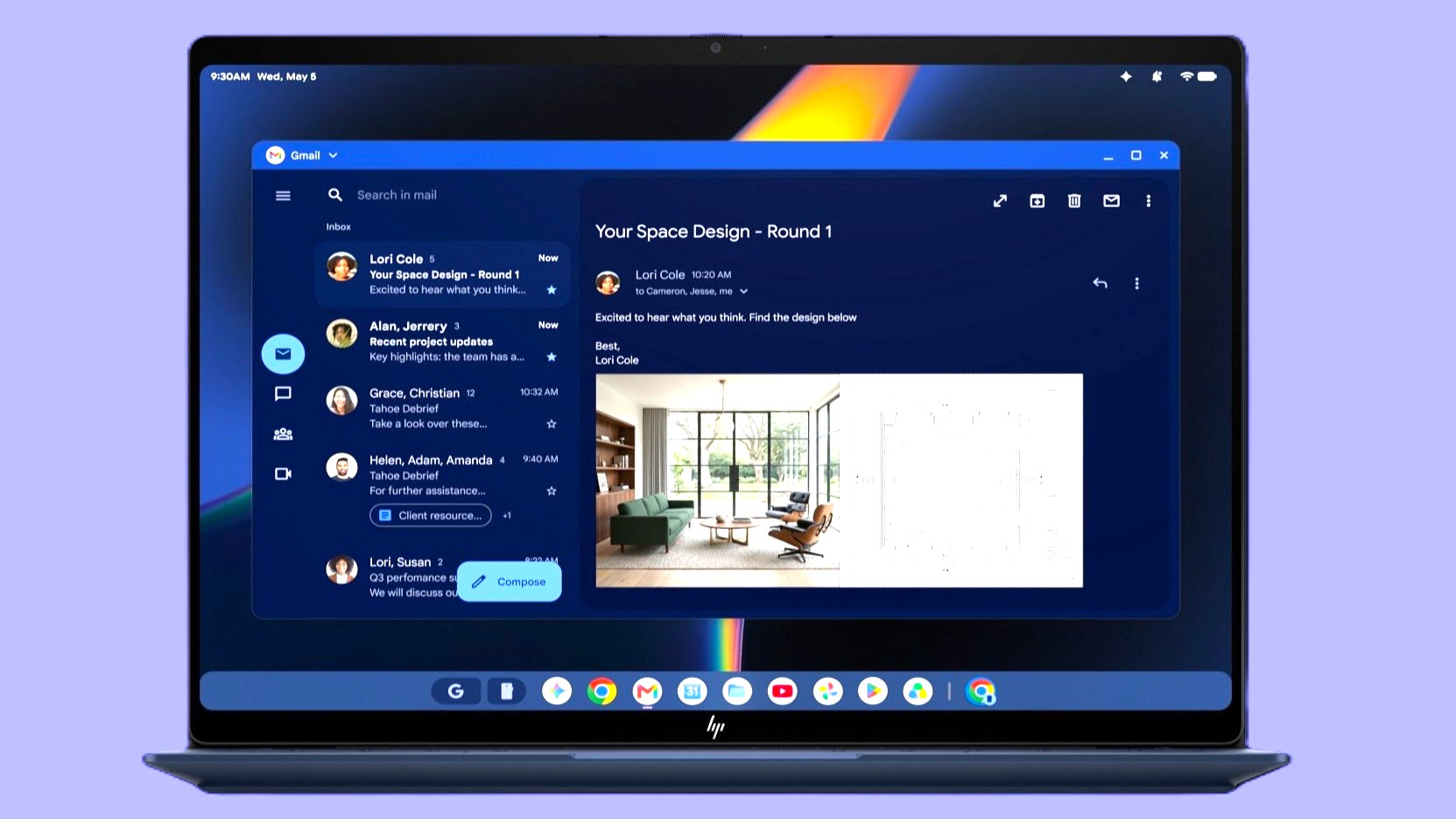
Googlebook combines the desktop web experience with access to Android applications.
Google says users can access the desktop Chrome browser with extensions alongside millions of Android applications through the Play Store.
Google also highlights compatibility with applications such as:
- Adobe Photoshop
- Adobe Lightroom
- CapCut
- Netflix
- HBO Max
The platform also supports Android games and PC gaming through services such as GeForce NOW.
This gives Googlebook a broader software ecosystem than a traditional browser-only laptop.
Googlebook and Android Phone Integration
One of Google’s biggest selling points is Android integration.
Googlebook is designed to work with Android phones out of the box.
The goal is to allow users to move between their phone and laptop without treating them as completely separate systems.
This approach is similar to the broader industry trend toward connected device ecosystems.
Apple has built continuity features between Macs and iPhones, while Microsoft has focused on Windows and Android integration.
Googlebook represents Google’s attempt to build a similarly connected experience around Android and its laptop platform.

Security Features
Googlebook also places significant emphasis on security.
Google says the platform uses security architecture derived from ChromeOS.
The system is anchored by Google’s Titan hardware root of trust, defense-in-depth architecture and on-device malware detection.
Google also says Googlebook includes a Level 5 security-certified pKVM hypervisor.
The hypervisor supports an isolated Linux environment where developers can run Linux tools and other workloads.
For developers, isolation can be particularly useful because development environments often require tools, dependencies and code from different sources.
Googlebook for Developers
Googlebook could be an interesting option for developers because it combines several development features into one platform.
Developers get:
- AI-assisted development through Antigravity
- Full terminal access
- Linux environment
- Android applications
- Chrome extensions
- On-device NPU processing
- Gemini integration
- AI-assisted workflows
Google says developers can use tools such as Claude Code and Antigravity CLI through the terminal environment.
The platform therefore isn’t positioned only as a consumer laptop.
Google wants it to be useful for people building software as well.
Googlebook for Students
Students could also benefit from the combination of AI and productivity tools.
A student might use:
- Gemini for research assistance
- Rambler for converting spoken ideas into organized notes
- Create My Widget for personal productivity tools
- Chrome for research
- Android apps for education
- Photoshop or other creative applications for projects
However, students should still verify AI-generated information rather than treating AI responses as automatically correct.
Googlebook for Creators
Creators are another target audience.
Googlebook supports applications such as Photoshop, Lightroom and CapCut, while the hardware includes high-resolution displays and dedicated AI processing.
For creators, the combination of AI tools and conventional creative software could reduce the need to constantly switch between separate applications.
The actual experience will vary significantly between Googlebook models because different manufacturers offer different hardware configurations.
Googlebook vs Chromebook
Googlebook and Chromebook share some technical heritage, but Google is positioning them differently.
| Feature | Googlebook | Traditional Chromebook |
|---|---|---|
| Target market | Premium users | Broad range |
| Gemini integration | Deeply integrated | Available on supported devices |
| Android apps | Yes | Yes |
| Desktop Chrome | Yes | Yes |
| Linux environment | Yes | Supported on many models |
| Premium hardware | Core focus | Varies |
| AI-focused hardware | Dedicated NPUs on launch models | Model-dependent |
| Starting price | $899 | Varies widely |
| Long-term updates | Up to 10 years stated for Googlebook | Varies by model |
Googlebook is therefore better understood as a new premium category built from Google’s existing Android and ChromeOS technologies rather than simply a renamed Chromebook.
Googlebook vs Windows AI PCs
Googlebook also enters a market already occupied by Windows AI PCs.
Modern Windows laptops increasingly include NPUs and AI features.
Googlebook’s main difference is the combination of:
- Android ecosystem
- Gemini
- Chrome
- Android apps
- Google services
- AI agents
- Google security architecture
The competition will ultimately depend on software compatibility, hardware quality, AI usefulness, battery life and pricing.
Googlebook Key Specifications
| Feature | Googlebook |
|---|---|
| Starting price | $899 |
| Launch manufacturers | Acer, ASUS, Dell, HP, Lenovo |
| Processors | Intel Core Ultra Series 3 / Snapdragon X Elite |
| NPU | Over 45 TOPS |
| Display | Up to 2.8K OLED |
| RAM | 16GB baseline; some models up to 32GB |
| Battery | Up to 14 hours |
| AI | Gemini Intelligence |
| AI features | Magic Pointer, Rambler, Create My Widget |
| Apps | Android apps + desktop Chrome |
| Development | Antigravity + Linux terminal |
| Security | Titan hardware root of trust, malware detection, pKVM |
| Updates | Up to 10 years |
| Pre-orders | September 21, 2026 |
| U.S. availability | October 4, 2026 |
Specifications can vary between individual Googlebook models. Google’s published platform information should therefore be checked alongside the specifications of the specific laptop being purchased.
What Makes Googlebook Different?
Googlebook is interesting because Google is combining several existing technologies into one laptop strategy.
The company already has:
- Android
- Chrome
- Gemini
- Google Cloud
- ChromeOS technology
- Play Store
- Google AI tools
Googlebook brings these technologies closer together.
The result is a laptop that Google describes as being designed around AI from the beginning rather than adding AI features as an afterthought.
Potential Benefits of Googlebook
Deep Gemini Integration
AI is integrated throughout the operating experience rather than being limited to a standalone chatbot.
Android Compatibility
Android users get a laptop designed specifically to work with their existing phone ecosystem.
On-Device AI
Dedicated NPUs provide hardware acceleration for supported AI workloads.
Long Software Support
Google says Googlebook OS will receive feature drops and updates for up to 10 years.
Developer Features
Linux access, terminal tools and Antigravity make the platform relevant to developers.
Premium Hardware
The launch lineup includes high-end materials, high-resolution displays and modern processors.
Potential Limitations
Despite the interesting features, Googlebook is not automatically suitable for every laptop buyer.
New Platform
Googlebook is a new category, so its long-term adoption remains to be seen.
App Compatibility
Although Google highlights millions of Android apps, the experience of individual apps can vary on a laptop.
Model Differences
Because Acer, ASUS, Dell, HP and Lenovo are producing different devices, specifications can vary significantly.
AI Dependence
Many of Googlebook’s headline features revolve around AI. Users who do not regularly use AI may receive less value from some of the platform’s features.
Regional Availability
The initial launch markets announced by Google do not include every country, so buyers elsewhere may have to wait for broader availability.
The Future of AI Laptops
Googlebook reflects a larger change in personal computing.
For decades, laptops were primarily defined by processors, memory, storage and display quality.
Now manufacturers increasingly compete on AI capabilities.
Dedicated NPUs, AI assistants, AI agents and natural-language interfaces are becoming part of the computer itself.
Googlebook pushes this idea further by making Gemini a central part of the laptop experience.
The direction is clear: future laptops are increasingly being designed not only to run applications but also to understand context and help users complete tasks.
The important question will be whether these AI features provide enough practical value to change everyday computing habits.
Should You Buy Googlebook?
Because Googlebook is a new product category, buyers should evaluate the specific model rather than the platform name alone.
Before purchasing, consider:
- Processor
- RAM
- Storage
- Display quality
- Weight
- Battery capacity
- Port selection
- Android compatibility
- Application requirements
- AI features
- Local pricing
- Warranty and support
For Android users who want a premium laptop closely connected to their phone, Googlebook could be particularly interesting.
For users who depend on specialized Windows-only applications, compatibility should be checked carefully before making a purchase.
Frequently Asked Questions
What is Googlebook?
Googlebook is Google’s new category of premium laptops built on the Android technology stack and desktop foundations from ChromeOS, with deep Gemini integration and Android phone connectivity.
When does Googlebook launch?
Googlebook pre-orders opened September 21, 2026. Google says devices will reach U.S. shelves on October 4, with availability in several other markets beginning October 5.
How much does Googlebook cost?
Googlebook starts at $899 in the United States. Pricing varies depending on the specific manufacturer and configuration.
Which companies make Googlebook laptops?
The initial Googlebook lineup includes laptops from Acer, ASUS, Dell, HP and Lenovo.
Does Googlebook use Gemini AI?
Yes. Googlebook is specifically designed around Gemini Intelligence, with features including Magic Pointer, Rambler and Create My Widget.
Can Googlebook run Android apps?
Yes. Google says Googlebook provides access to millions of Android apps through the Play Store alongside the desktop Chrome browser and its extensions.
Is Googlebook good for developers?
Google is targeting developers with features including Antigravity, a Linux terminal environment and the ability to use development tools such as Claude Code and Antigravity CLI.
How long will Googlebook receive updates?
Google says Googlebook OS will receive regular feature drops and updates for up to 10 years.
Final Thoughts
Googlebook 2026 represents Google’s attempt to rethink the laptop around AI, Android and connected-device experiences.
The platform combines premium hardware from Acer, ASUS, Dell, HP and Lenovo with Gemini Intelligence, Android applications, Chrome, AI development tools and Google’s security architecture.
Starting at $899, Googlebook is entering a competitive laptop market, but its strongest differentiator is the software experience rather than hardware alone.
The combination of Gemini, Magic Pointer, Rambler, Create My Widget, Android integration and on-device AI processing gives Googlebook a distinctly AI-first approach to personal computing.
Whether Googlebook becomes a major laptop category will depend on real-world performance, application compatibility, AI usefulness, battery life, pricing and consumer adoption.
For now, however, Google’s new laptop platform is one of the most notable technology releases of September 2026 and an important development in the growing AI PC market.